 Pat Grady
Article on X
2026: This is AGI
Saddle up: your dreams for 2030 just became possible for 2026.
Read on X ↗Pat Grady is one of the two partners who have led Sequoia since November 2025, alongside Alfred Lin. He has run the firm's growth investments since 2015 and was behind ServiceNow, Snowflake, OpenAI and Harvey.
On September 24, the investment committee of Boston College, one of Sequoia's LPs and the school he went to, asked him what's going on with AI. He recorded the answer as a 15-minute Loom. He showed it to his partners, and they told him to share it with everyone.
The @BostonCollege Investment Committee (an LP and my beloved alma mater) asked for a few thoughts on what's happening in AI. I recorded a test run yesterday morning and then shared it with my partners, who encouraged me to share it more broadly... so here you go! This is not Show more
He says himself it isn't a sales pitch. It's still worth reading with the speaker in mind: an investor telling another investor why their money is well placed.
He opens with Sequoia's usual frame: technology waves, each one stacked on the last. Chips in the 60s, systems in the 70s, networks in the 80s, the internet in the 90s, apps in the 2000s, mobile in the 2010s. Now AI.
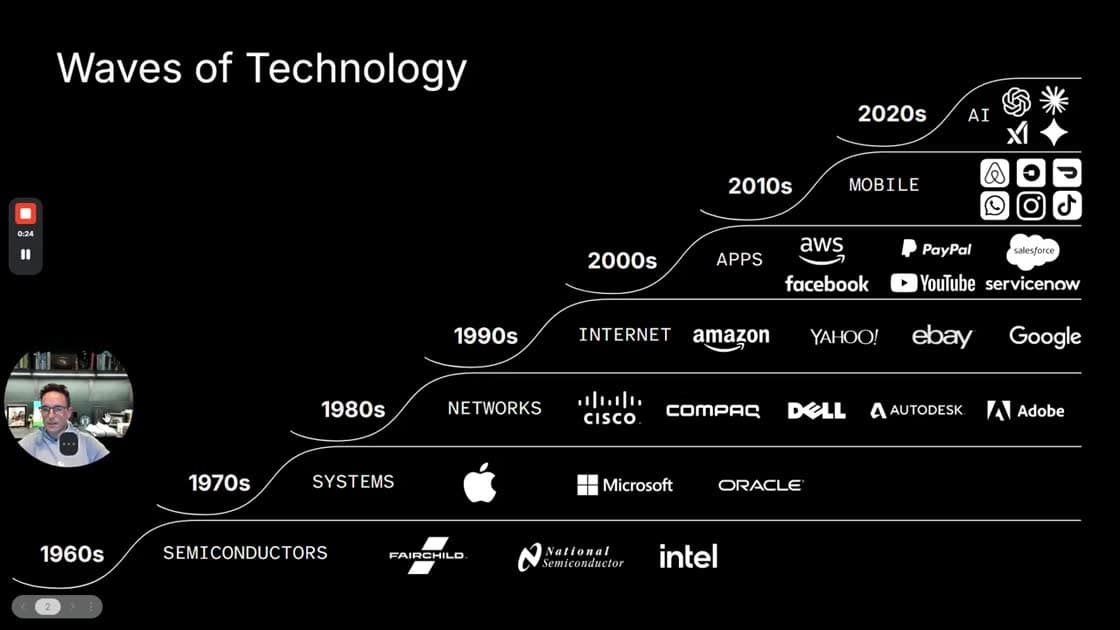
According to Grady, this one differs from the others in three ways.
It's the biggest, by far. It isn't going after the software market, around US$650 billion, but after services: US$10 to 20 trillion. One or two orders of magnitude more.
It's the fastest. Not because of AI itself, but because distribution is already in place. When cloud started, fewer than 100 million people were online. For mobile you had to buy a smartphone. Today everyone has both.
It has a different shape. The internet, networks and cloud were communication revolutions: they changed how information is distributed. AI is a computation revolution: it changes how information is processed. That hasn't happened since silicon in the 60s and 70s.
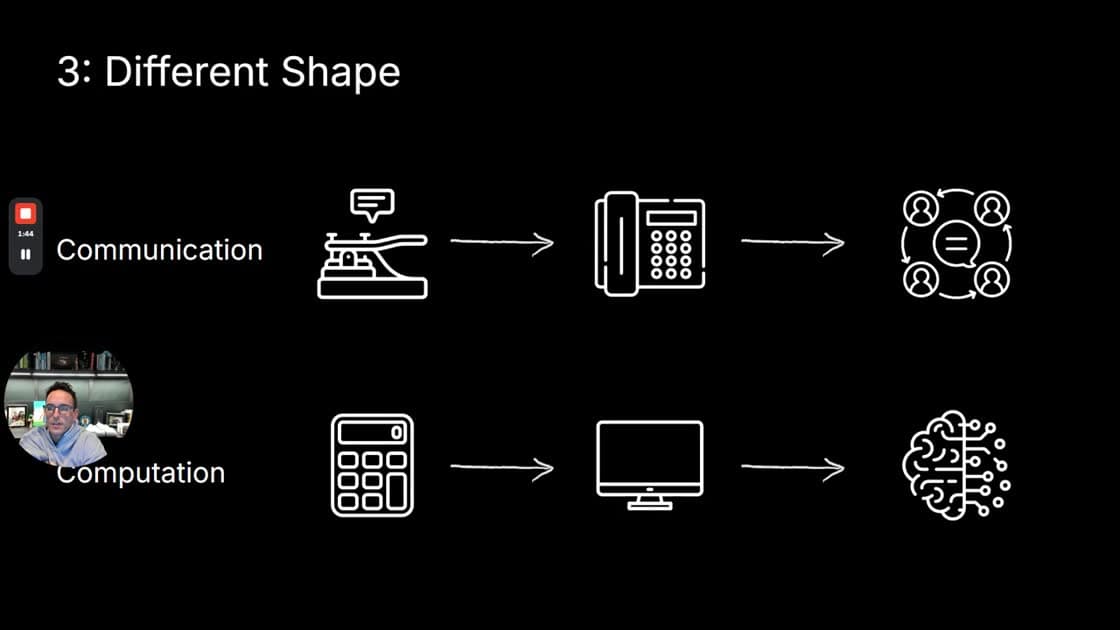
It sounds like semantics, but it has a practical consequence: the ground you build on keeps moving.
Three jumps in five years:
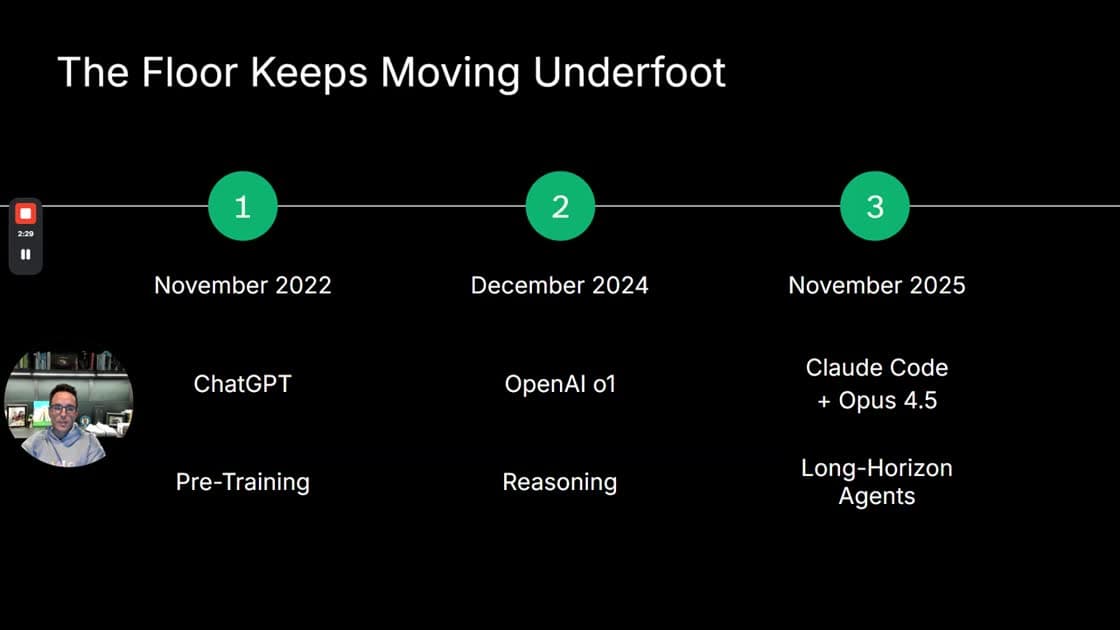
They look like three points on one line. For Sequoia, the third was a different kind of jump: the moment we reached AGI.
This isn't new to the video. In January, Grady and Sonya Huang published a piece with exactly that title.
 Pat Grady
Article on X
2026: This is AGI
Saddle up: your dreams for 2030 just became possible for 2026.
Read on X ↗Grady admits people laughed at them back then. Today, he says, it went from contrarian to consensus.
So what changes? He uses an analogy: until now AI was a faster horse, software a little better than what you already had. Now the cars have arrived, something that moves you in a different way, and it already shows in the real economy.
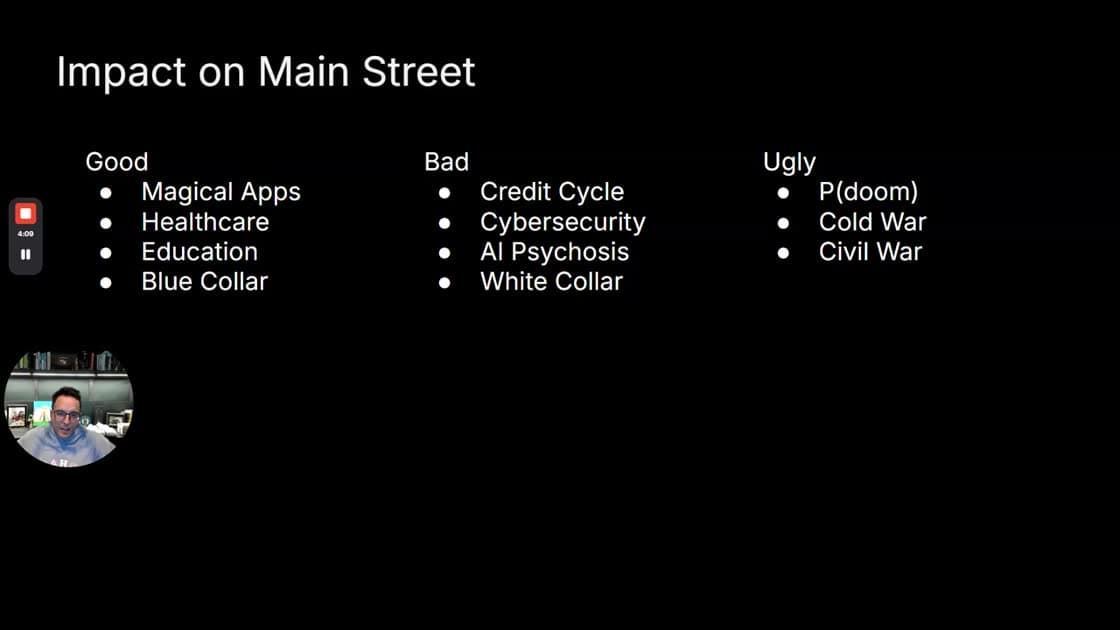
The good. Apps that stopped being tools and became assistants: they don't process tasks, they get jobs done. A rural doctor with all of medicine in their pocket. Alpha School as a preview of education. And physical jobs from building data centers.
The bad. Hyperscalers now fund capex with debt instead of cash flow. Cybersecurity will get worse. There are cases of AI psychosis. And white-collar work is under attack: whoever learns to use AI will do fine, whoever doesn't will struggle.
The ugly. He says we're in a cold war with China, that part of the alarmism against data centers on social media is state-sponsored, and that the inequality AI brings may deepen social tension. He calls it dramatic, but doesn't rule out a civil war.
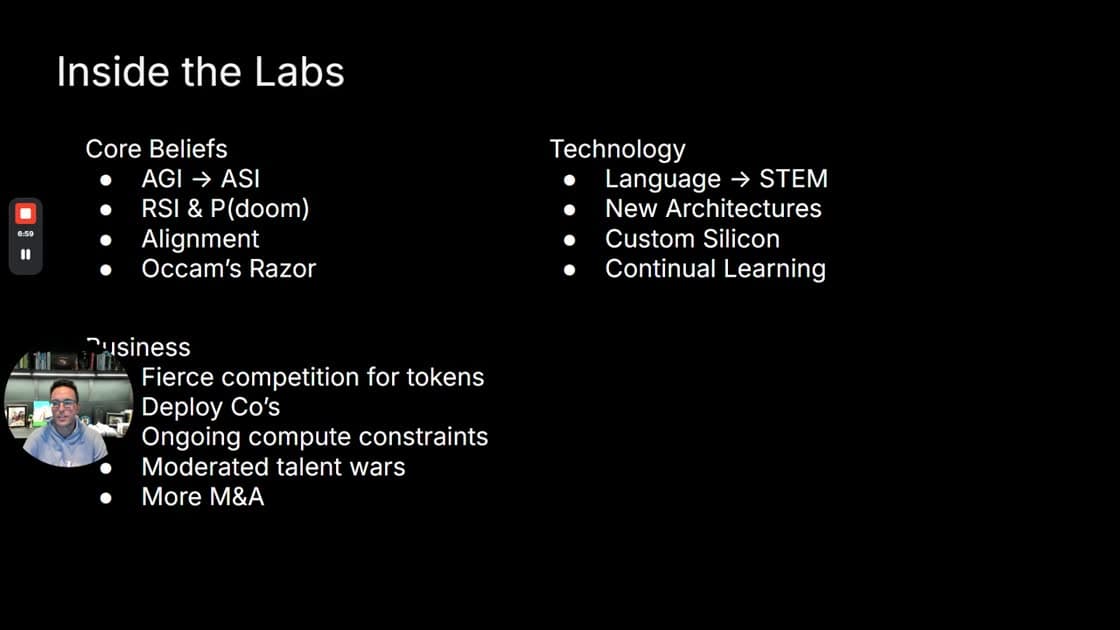
And one piece of advice I liked: the labs aren't sophisticated communicators. If something they say sounds odd or contradictory, it's probably just what they think.
This is the center of the talk. As @nachomargulies put it, "la verdad de la milanesa", Argentine for the real deal:
La verdad de la milanesa


Sequoia's @gradypb recorded his view on AI for one of Sequoia's own LPs, and his partners told him to share it with everyone 😍 Gold
Sequoia calls it the diffusion gap. The green curve, what models can do, shoots up almost vertically. The white one, what people actually use, crawls flat for most of the chart and only steepens at the end.
The arrow between them is the opportunity, mostly for people building applications. It's the slide that splits the talk in two: up to here, what's happening in AI. From here, what it means for people who build and invest.
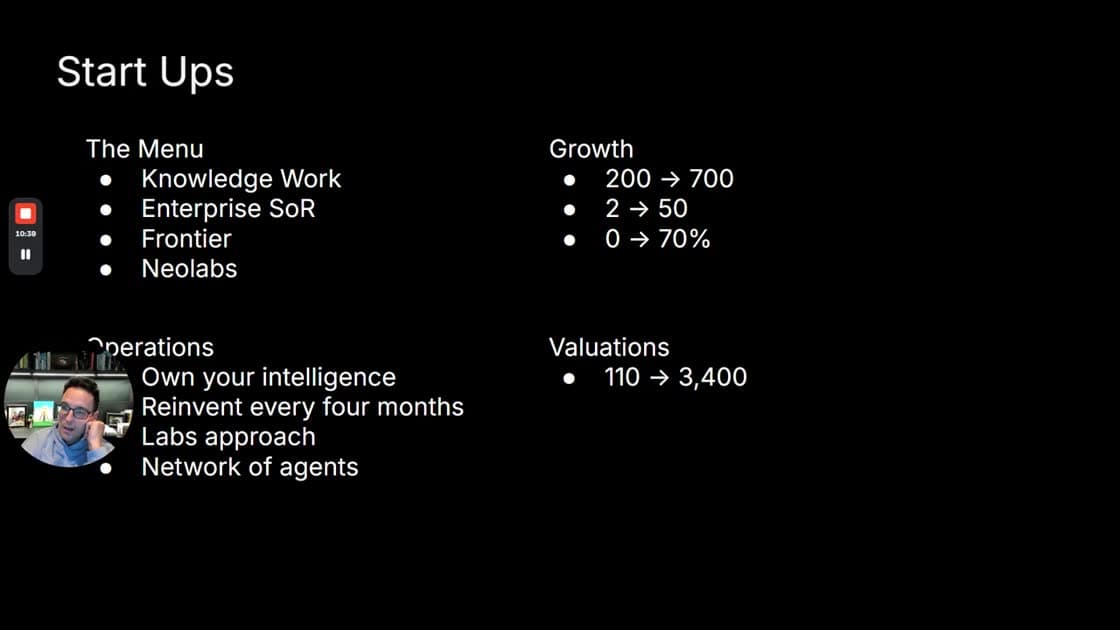
Mostly in high-value knowledge work: code, cybersecurity, healthcare, finance, accounting. Sequoia believes each of those domains will have a giant company. He also names new enterprise systems of record, drugs designed in days, and neolabs, small labs focused on one domain or a new architecture. One he cites is Jev, a classifier that picks from fixed options instead of writing text.
And how the startups that work operate:
This is the part people talked about most on X.
In seven rounds over the past year, Sequoia came in at a US$110 million valuation. Less than a month later, on average, another investor put money in at US$3.4 billion. About 31 times more. He calls it froth himself.
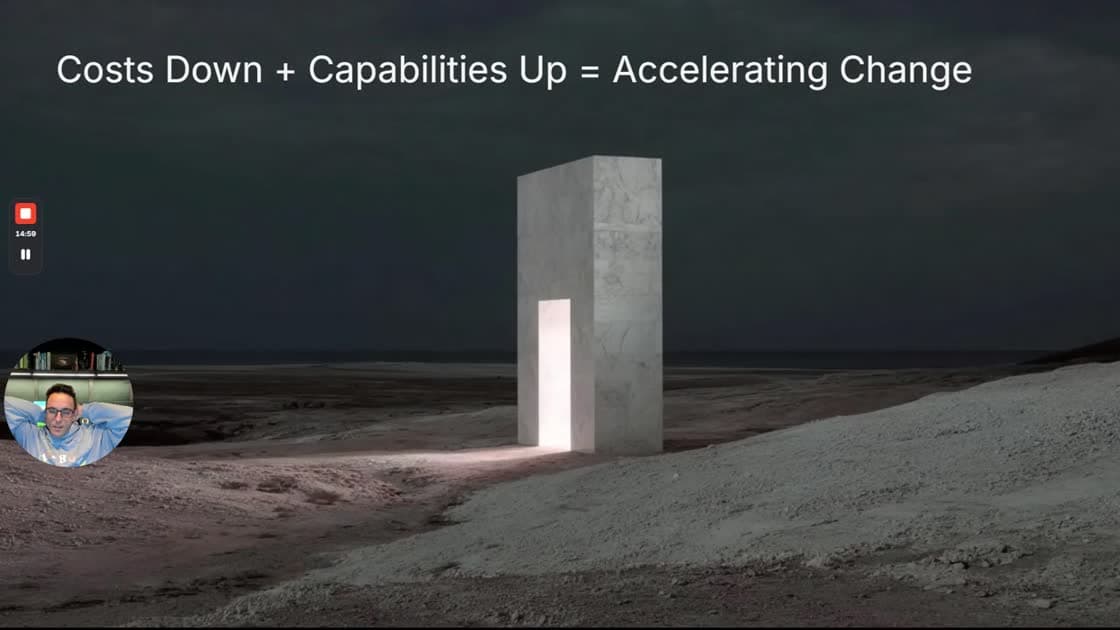
He closes with a lit doorway in the middle of the desert. We don't know what's on the other side. What we do know is that when costs fall and capabilities rise, change speeds up.
"Hold on to your hats."
Some figures only come up in the audio, not on the slides. Grady says Jev went from 0 to US$100 million in revenue in seven days, and calls it "an outlier amongst outliers" himself. He also says Instinct has sustained 10% day-over-day growth. I couldn't find another source for either.
The startups slide also shows a "0 → 70%" he never explains. When he gets there, he cuts himself off with "actually, no, we're going to change these slides". I'm leaving it at that rather than inventing a reading for it.
The full video is in Grady's post. It's 15 minutes and worth it.
